
Bikepackers! Have you run out of spaces on your frame to mount more bags to your bike?
Are you sick of stuffing, cinching and faffing? It might be time to give panniers a go!
A lot of cyclists tend to see bike touring and bikepacking as two separate activities. We imagine the biketourer with their sturdy bicycle laden with racks and pannier bags. Bike packing, on the other hand, brings to mind lightweight gravel or hardtail bikes, garnished in an assortments of smaller bags mounting directly to handlebars, frame, seatpost or fork. This stems from different needs and priorities; a bike tourer needs to be ready for a range of conditions they may encounter on their long distance trip, while many bikepackers prioritise speed or ease of tackling demanding terrain afforded by a sleeker, lighter set up.
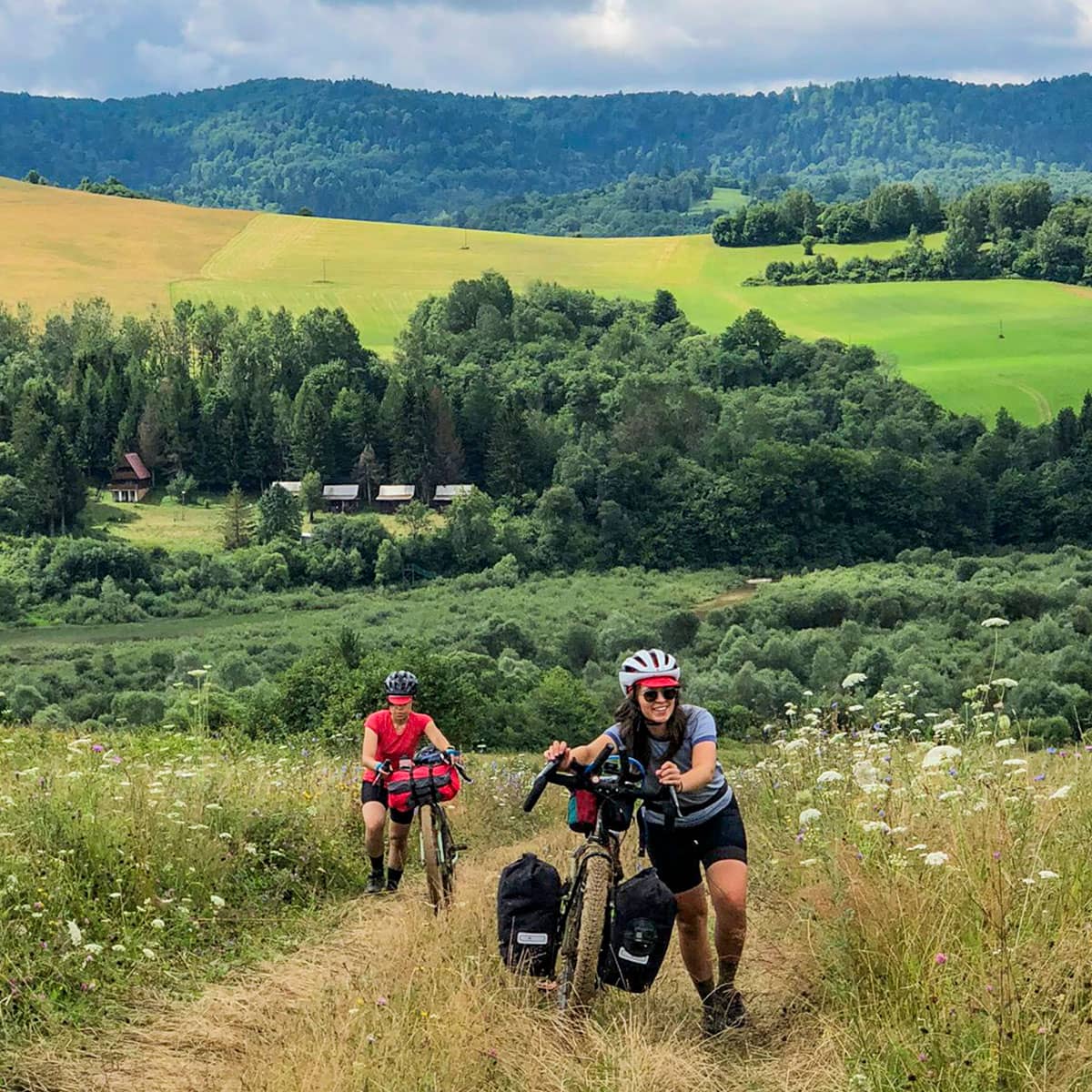
Over the recent years, bikepacking has gained a lot of popularity and many biketourers have made the switch to bikepacking bags for shorter trips. But those who entered the world of cycling adventures via bikepacking may find themselves wishing they had more space, craving the comfort of a tent over a bivvy on a rainy night, or facilities to cook a fresh meal instead of eating re-hydrated food for the 5th day in a row.
Most bikepacking set ups use the space between handlebars and underneath the back of the saddle to gain the majority of their packing volume. This can pose a challenge for those with small frames, creating an additional barrier for many women. With little space between the handlebar/saddle and the tyre, carrying capacity is limited, and riders often find themselves having to stop to readjust and cinch bags to avoid tyre rub, especially on rougher terrain.
A hybrid setup
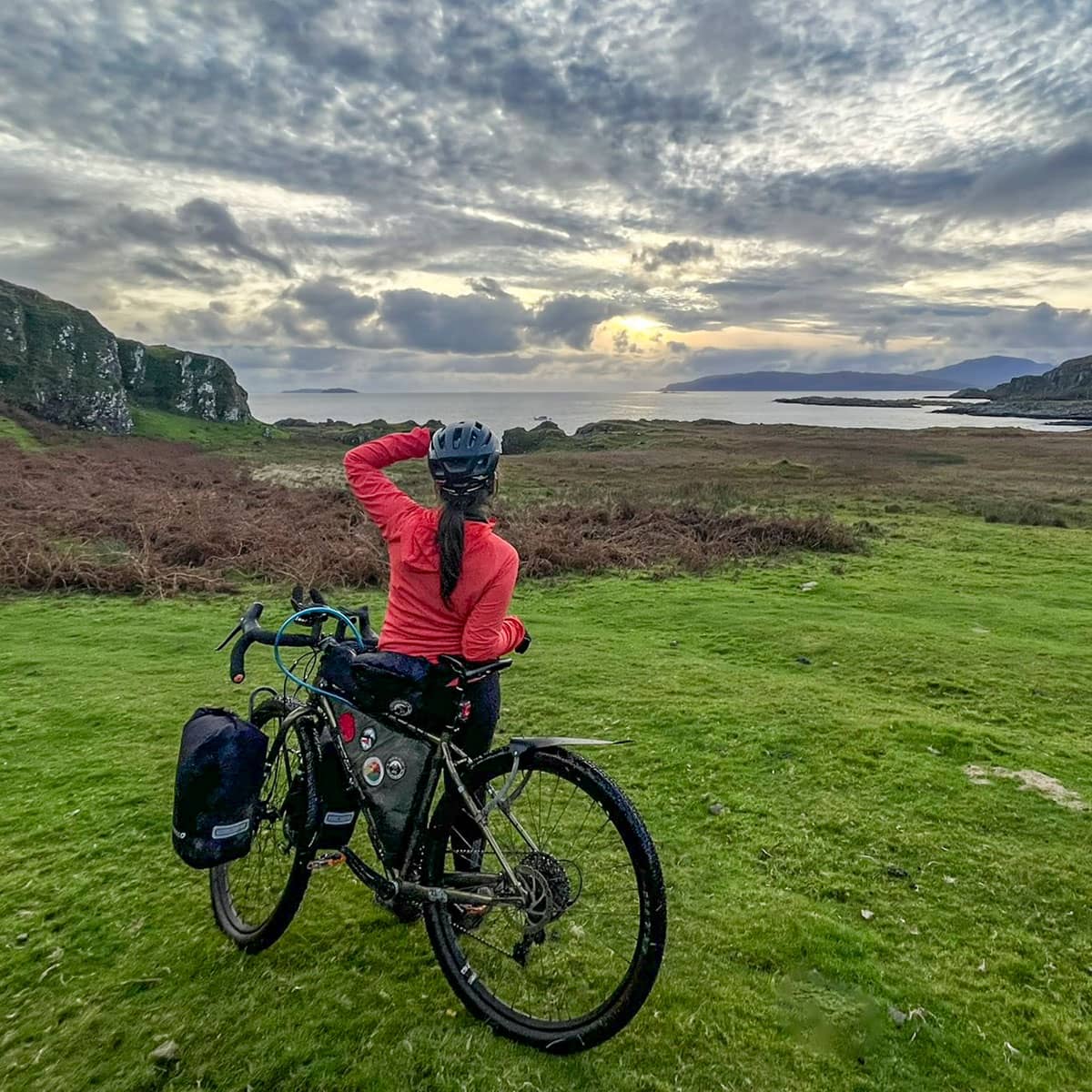
Over the last few years of bikepacking, my search for a sturdy, easy to pack, large-volume bikepacking system for my XS Kona Sutra Ltd fame has led me to explore many options, and delivered me to a solution involving a front rack with crosso’s twist 30 pannier bags, accompanied by bikepacking style bags around the frame.
Having tried and tested this set up over two week-long bikepacking trips and a few overnighters, I’m thrilled to have found something that works so well for me. Whilst I won’t be throwing away my bikepacking bags just yet (there is a time and place for them too) I think more bikepackers should consider adding panniers to their kit, here are a few reasons why:
More time
For me, the biggest difference when switching from bikepacking bags to panniers was how much quicker and easier many parts of my bikepacking day became:
Packing
Every morning, while my friends were busy stuffing their kit into various bikepacking bags, making sure to pack it in the correct order, and compress it sufficiently to close the bags, I had some extra time to enjoy the morning, having thrown everything into my two panniers.
Loading/unloading bike
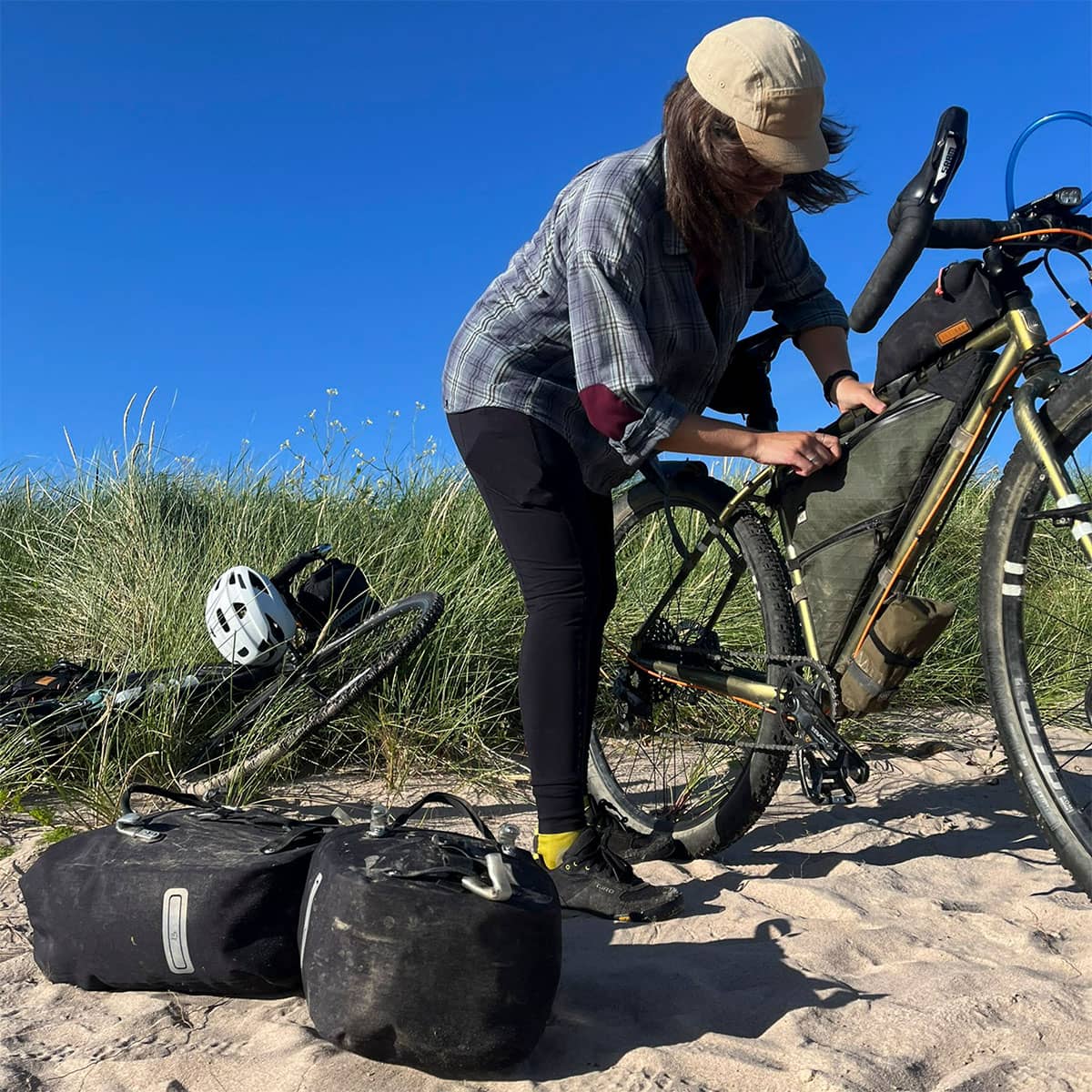
Previously, attaching my bags to my bike meant awkwardly gripping the wheel with my knees to keep the bike upright while I try to manouver a collection of different straps into their correct position, via various loops and openings, before finally tightening them, making sure the bags are positioned and packed in a way that doesn’t run the risk of them sagging into the wheel. The whole process required a lot of time and patience, and was not made easier by cold fingers. Now, I can mount and dismount each pannier using one swift move. This also makes unloading the bike and making multiple trips a viable and easy option for situations like having to carry the bike up stairs, or over sections of particularly challenging terrain.
Access to contents of bags
Most bikepackers can probably relate to procrastinating putting on an extra layer when you know it’s sitting in the depths of your bag, under many other bits of kit that would need to be unpacked to reach it. Due to their wider opening, this is much less of an issue with pannier bags. During the day, when I find myself needing to access something from the bag, most of the time I can simply reach down, open the bag, and grab what I need, without even getting off the bike!

More carrying space
My current set up with pannier bags has a similar volume to my previous bikepacking set up; I have swapped a 13l handlebar roll, a 14l saddle bag, and two ~2l fork bags for a pair of panniers at 15l each. However, if I find myself in need of more space, I now have many more options to add capacity, with nothing stopping me from also using my handlebar or saddle bags. If I chose a rear rather than front rack, fork bags would also still be an option. The great thing about incorporating panniers into your packing system is being able to mix and match with bikepacking-style bags to find a solution that works for you and your needs!
Comfort
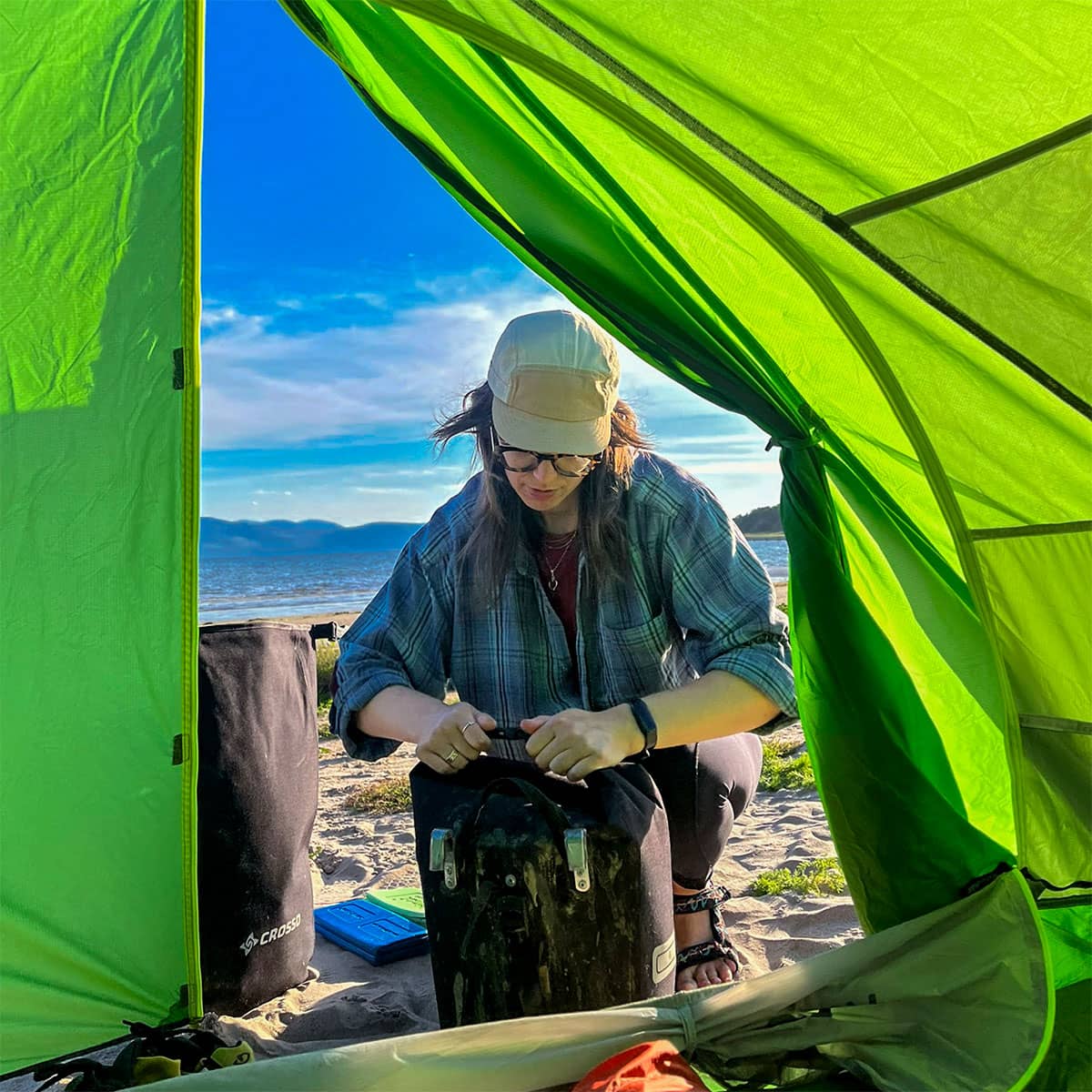
Switching to pannier bags has freed up a lot of space on my handlebars, whatever hand position I choose there is now plenty of space for my fingers, and no bags to squish them against the hoods. Thigh rub against the saddle bag is also no longer a problem.
Peace of mind
While riding with bikepacking bags I always found myself worrying about every noise and rattle coming from my bike. Was something about to come loose? Were my tyres wearing a whole in my bags? Would my bags find a new way to damage the paint on my frame? Switching to panniers has allowed me to ride with much more peace of mind, without having to worry about tyre rub, frame damage, or whether my entire host of smaller bags are still securely attached.
Handling
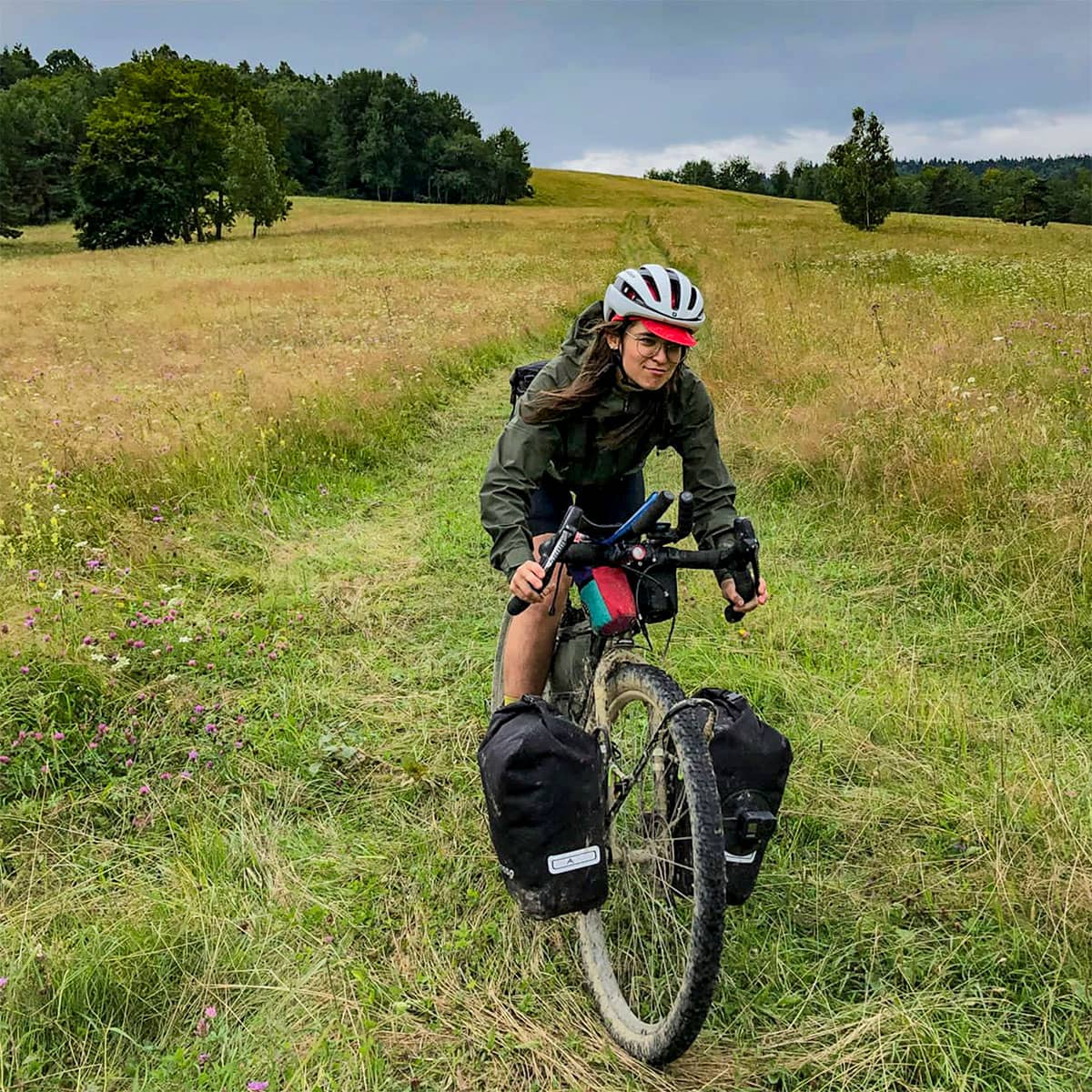
Mounting my panniers on a low-rider front rack, for the most part, has been positive for how the bike handles. Loading the front wheel adds grip and stabilises the steering, giving me more confidence when descending. There can be a bit of side to side front “wheel flop” on steeper climbs, but I found this to be less noticeable than when loading my handlebar and fork bags with a smaller total weight.
Cheaper
Bikepacking can quickly become an expensive hobby, and I’ve always tried to be thrifty in finding solutions to mounting bags on my bike. Perhaps if I invested more into top end bikepacking kit, I would not find it as frustrating to use. There are manufacturers making bikepacking bags that are waterproof, durable, easy to mount/dismount and easy to pack and close, but buying a full set of these is a considerable expense. On top of this, some of these solutions may need additional mini racks to keep them off the front tyre on smaller frames. In comparison, it is easy to find good deals on pannier racks, and crosso’s twist panniers tick all the boxes above at a fraction of the price.
Front or rear rack?
I don’t have much experience with rear racks, but there are a few reasons why I chose a front rack over a rear rack, as well as benefits I found:
- Hike a bike: front panniers do not get in the way when pushing your bike up steep hills
- Handling: front panniers add grip to front wheel, stabilise steering, and compared to rear panniers avoid risk of rear wheel trying to overtake you on steep descents
- Easy access: you can grab things from inside the bags without getting off the bike
However, there are also a few pain points it is good to be aware of:
- Extra mounting space: front racks tent to be quite minimal, and I find myself wishing I had some extra space to tie on things like wet clothes or a pair of sandals. Bungee cord often found on bikepacking bags is great for this, but a rear rack would also likely offer more options.
- Lifting the front wheel: with most of the weight towards the front of the bike, it can become difficult to lift the front wheel over obstacles like fallen trees, deep ruts or steps.
Panniers are certainly nothing new, and I’m sure some of their long term fans are perplexed by the comparatively convoluted nature of the newer bikepacking approach, as well as the perseverance with which bikepackers continue adding additional small bags and mounts to their bikes, rather than opting for the obvious solution. But as someone who’s cycling adventure started with bikepacking, I understand the appeal of lightweight and minimal set ups. The search for mine took me full circle to the roots of bike touring, and panniers. These two worlds are not as separate as they may seem. When we let go of this false dichotomy we can explore new solutions that fit our needs, regardless of what words we use to describe our enthusiasm for bicycle based travel.
Text & photos: Maja Naumczyk
Lover all types of bike adventures, but the ones she enjoys the most involve camping and riding in the mountains of Poland, Slovakia and Scotland.
 Founder of Crosso